New opportunities for landowners and investors under 'granny flat' and shed rule changes
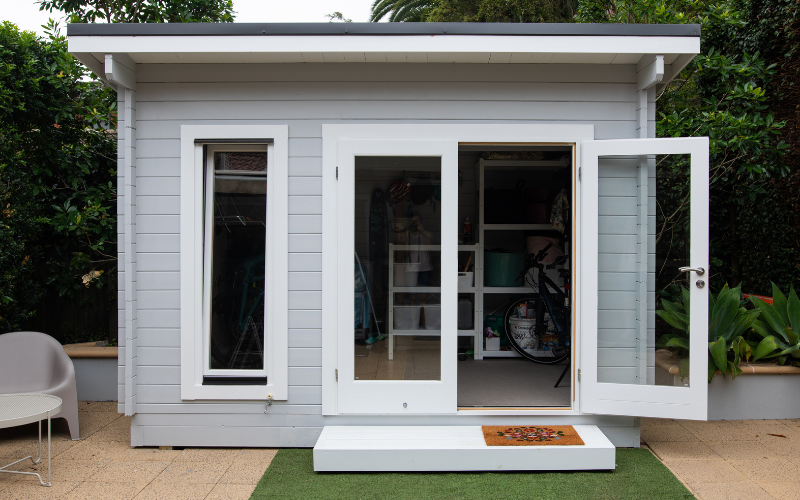
With rising construction costs and ongoing pressure on New Zealand’s housing market, the government is aiming to reduce 'red tape' and lower the cost of building small standalone dwellings to increase housing supply.
The reforms make it possible for many granny flats, sheds and other small detached buildings to be built without the need for a building or resource consent, provided certain conditions are met.
No building consent required for 'granny flats'
The Building and Construction (Small Standalone Dwellings)Amendment Act 2025, passed on 23 October 2025, will permit small standalone dwellings (including site connections) to be built without a building consent. Such changes are expected to come into effect in early 2026, with the commencement date yet to be announced.
To qualify for the exemption, the dwelling must:
- Be 70 square metres or less;
- Be standalone and new (not an existing building or addition to an existing building);
- Be single storey (with no mezzanine floor);
- Have a maximum height of no more than 4 metres above the floor level, a floor level no more than 1 metre above ground level, and be set back at least 2 metres from any other building or legal boundary;
- Be constructed of lightweight materials;
- Comply with the Building Code;
- Be built or supervised by a Licensed Building Professional (LBP); and
- Not be on land subject to natural hazards unless adequate provisions are in place.
A Project Information Memorandum (PIM) must be obtained from Council before construction begins. Without the owner obtaining a PIM prior to commencement of the works, the exemption will not apply and a full building consent will be required. The timeframe for issue of a PIM by Council is within 10 working days of the application.
Once a PIM has been issued, the building work must be completed prior to the PIM’s 2 year expiry period. Upon completion, the owner must notify Council that the works are complete and provide all records of work, certificates of work, design plans and plumbing/drain laying documentation.
Resource management considerations
Simultaneously, the government is progressing changes under the Resource Management Act 1991 that would see many small standalone dwellings exempt from requiring resource consent. This will be under a new National Environment Standard (NES) for minor residential units, which is expected by the end of 2025. Under the current draft NES, the standalone dwelling must:
- Be secondary to an existing home on the same site;
- Contain only one small standalone dwelling per property; and
- Comply with maximum site coverage requirements and zone-specific rules (including to meet larger setback requirements in rural zones).
It is important to note that the building consent exemption and the NES serve different purposes. For example, a granny flat could be exempt from requiring a building consent, but still require resource consent. As the NES is still in draft form, the exact requirements will only be confirmed once it is finalised. Additional conditions may apply and particular zoning or district planning rules may still override the exemption.
Relaxed rules for sheds/sleepouts
In relation to smaller detached buildings such as sheds, garages and sleepouts, Schedule 1 of the Building Act 2004 was updated on 23 October 2025 to relax building consent requirements and boundary setback rules for the following structures:
- Buildings under 10m²: Previously, these small structures could be built without a building consent but had to be setback from the boundary by their own height. Under the new rules, they can now be constructed right up to the boundary without requiring a building consent; and
- Buildings between 10–30m²: Previously, these buildings required a building consent and a setback from the boundary by their own height. The updated rules allow them to be built without a building consent, provided they are constructed from lightweight materials and maintain a minimum 1 metre setback from the boundary.
Additional restrictions applying to the construction of these structures include:
- The building must not contain sanitary or cooking facilities;
- Sleeping accommodation is only permitted if the structure is used in connection with an existing dwelling and smoke alarms are installed;
- The maximum height must not exceed 3.5 metres above floor level, and the floor level must be no more than 1 metre above the ground; and
- Owners must continue to ensure compliance with the Building Code as well as any applicable zoning or resource management rules.
Conclusion
These changes mark a significant step towards simpler and more efficient processes for small-scale building works in New Zealand. Landowners will be able to add granny flats, sheds, and other detached structures with fewer barriers, lower costs, and less time, while builders will be better placed to commence works without facing consenting delays from Council. As the Building and Construction (Small Standalone Dwellings) Amendment Act 2025 is yet to be formally brought into force and the NES for minor residential units is still being finalised, the full requirements of the exemption and resource consent requirements for granny flats will be confirmed once these processes are complete.
While the reforms reduce consenting hurdles, they may also shift greater responsibility onto landowners and property purchasers. With Council taking a more limited role, there is less independent oversight to verify that structures comply with Building Code and planning requirements. It will be important for landowners to maintain clear records of work and compliance. Likewise, property purchasers may need to carry out more extensive due diligence investigations to confirm that any exempt buildings on a property were lawfully constructed and meet the applicable standards.